
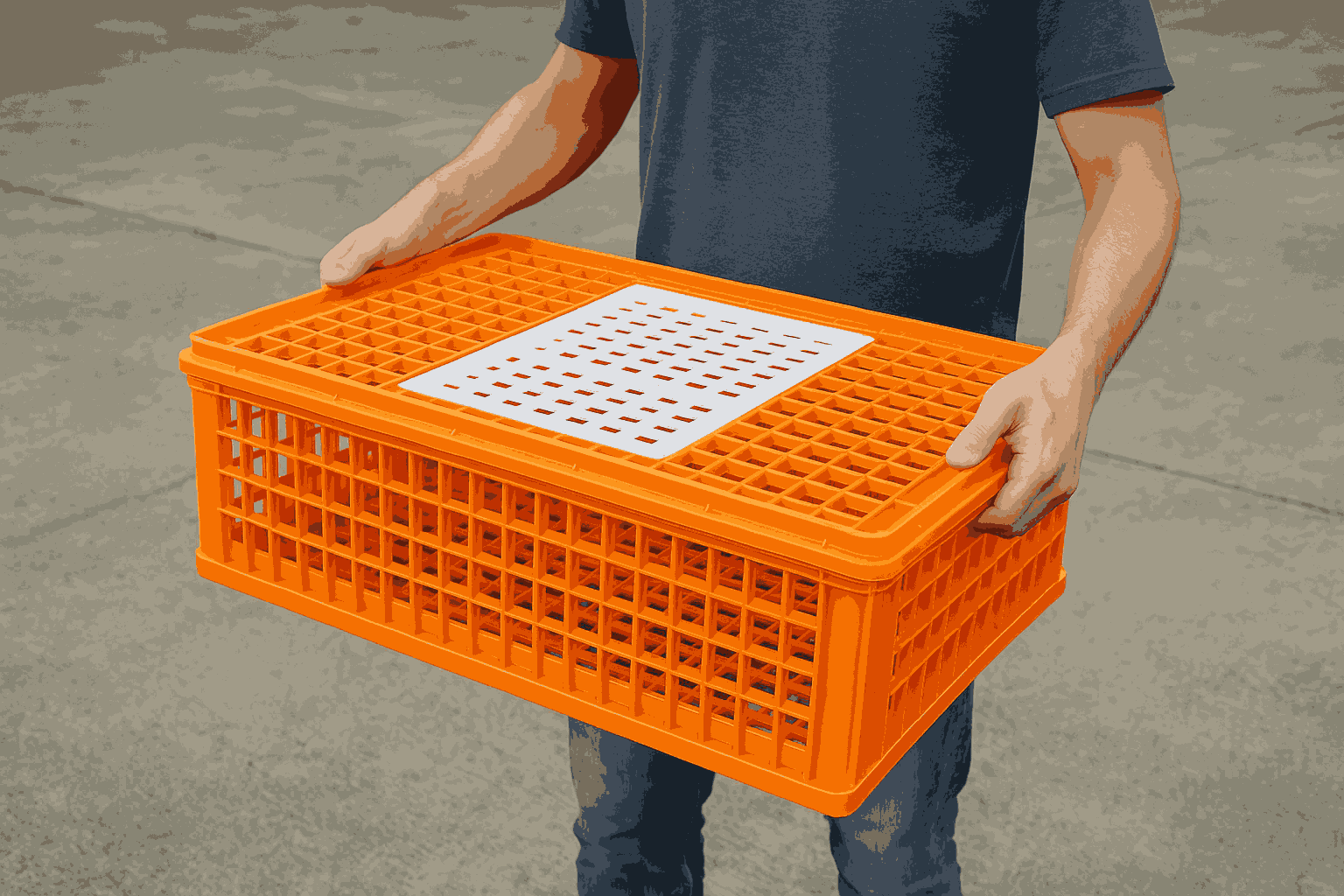
In today’s modern poultry farming, where efficiency and hygiene are paramount, selecting farming tools is not just about functionality but also sustainability.
One crucial component that is often overlooked is the black plastic chicken crate. Although it may seem simple, this tool plays a vital role in the distribution, maintenance, and logistical management of poultry.
Professional farmers are now turning to practical, strong, and durable solutions such as high-quality plastic chicken crates to meet productivity challenges and biosecurity standards.
This article provides a complete review of the functions, capacity, materials, and tips for selecting the best chicken crate that meets industry needs!
Why Is Capacity Important in Chicken Transportation?
The capacity of chicken crates is extremely important as it directly affects the chickens’ health, logistical efficiency, and loss rates during distribution.
If crates are too crowded, chickens are more prone to stress, injury, or even death before reaching their destination. On the other hand, if underloaded, operational costs increase due to the need for more trays.
Here are some reasons why proper capacity matters:
- Ensures Animal Welfare
Overcrowding during transport can lead to suffocation, heat stress, and reduced meat quality.
- Reduces Mortality During Transport
Chickens crushed or trampled due to overloading risk dying before reaching slaughterhouses or markets.
- Improves Transport Efficiency
Determining the ideal capacity allows companies to optimize payload volume in a single trip.
- Complies with Industry Standards and Regulations
Many poultry transportation standards—both SNI (Indonesian National Standard) and international—require a maximum number of chickens per crate to ensure safety.
What Is the Standard Capacity of a Chicken Crate?
Chicken crate capacity generally ranges between 10 to 20 birds, depending on the crate size and the average weight of the chickens being transported.
It’s important to note that crate capacity is not one-size-fits-all, as it depends heavily on the type of chicken and the crate’s dimensions.
Here is an estimate of ideal capacities by chicken type:
Broiler Chicken (Meat Chicken)
- Crate size: ±94 × 57 × 28 cm (large crate)
- Average weight: 1.6–1.8 kg per bird
- Capacity: 15–20 birds
Free-Range Chicken (Ayam Kampung)
- Crate size: ±78 × 58 × 28 cm (small crate)
- Average weight: 0.8–1.2 kg per bird
- Capacity: 18–22 birds
Spent Layer Hen (Retired Egg-Laying Hen)
- Crate size: ±94 × 57 × 28 cm
- Average weight: 1.5–1.7 kg per bird
- Capacity: 14–18 birds
DOC (Day Old Chick)
- Uses special chick boxes
- Weight: 40 grams per chick
- Capacity: 80–100 chicks per crate
Crate Material and Its Impact on Capacity
The material of the crate directly affects its load capacity, as it determines the crate’s strength, flexibility, and durability during use.
Chicken crates are typically made from HDPE (High-Density Polyethylene), a material known for its strength under pressure and resistance to deformation when fully loaded or stacked.
HDPE enables optimal capacity because it:
- Doesn’t crack easily under heavy loads
- Maintains structural shape when stacked
- Resists heat, impact, and extreme weather
Can Chicken Crates Be Recycled?
Yes, most chicken crates made from industrial plastics like HDPE and PP can be recycled.
This recycling helps reduce plastic waste and supports sustainability in the poultry industry.
Key benefits of recycling chicken crates:
- Reduces long-term production costs
- Lowers carbon footprint and industrial waste
- Converts damaged crates into new raw materials
- Supports eco-friendly initiatives in poultry businesses
Improve Your Chicken Distribution Efficiency with Bioplast
A sturdy and hygienic chicken crate is not just about packaging—it’s a vital part of the modern poultry distribution system.
Bioplast offers the ideal solution with high-quality HDPE chicken crates that are durable, easy to stack, and specially designed for industrial needs.
With ergonomic design and premium materials, these products help ensure poultry comfort, simplify logistics, and boost your operational efficiency.
Now is the time to switch to stronger, safer, and more reliable packaging solutions with Bioplast.