
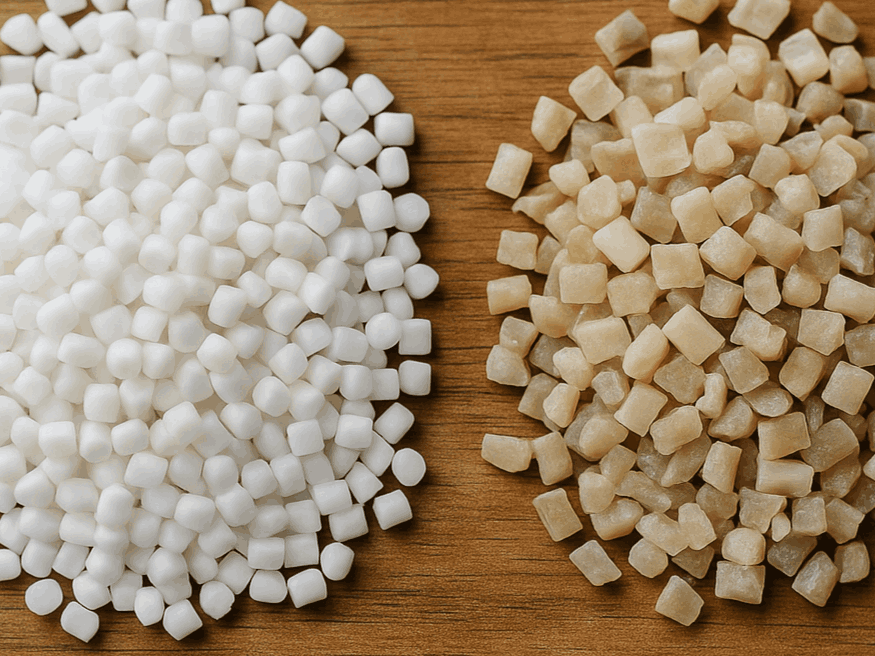
In response to growing global environmental challenges, industries are increasingly adopting bioplastics as a more environmentally friendly alternative to petroleum-based plastics.
But can bioplastics, as a type of plastic, truly replace conventional plastic entirely? How are they made, and what are their strengths and limitations?
This article will provide a complete overview of bioplastics made from natural materials such as corn starch, cellulose, and sugarcane, while comparing them with conventional plastics derived from fossil fuels.
Read on to the end to find out whether bioplastics are the right solution to reduce environmental impact.
What Are Bioplastics? Definition, Characteristics, and Basic Functions
To understand whether bioplastics are truly better than traditional plastics, it’s essential to first understand what bioplastics are in terms of definition, properties, and basic functions.
Definition of Bioplastics and How They Differ from Conventional Plastics
Bioplastics are a type of plastic made from renewable resources such as corn starch, cellulose, sugarcane, and even biomass from agricultural waste.
Unlike conventional plastics derived from petroleum, bioplastics can biodegrade naturally, thanks to microorganisms such as bacteria, making them more eco-friendly.
Bioplastics may look and function like regular plastic since they are also made of polymers, but they have fundamentally different properties and environmental impacts.
What Do Bioplastics Mean in the Packaging Industry?
In the packaging sector, bioplastics play a crucial role as an eco-friendly alternative to traditional plastic.
Various types of plastics produced from renewable materials, such as PLA (Polylactic Acid), PHA (Polyhydroxyalkanoate), and TPS (Thermoplastic Starch), are now commonly used for food packaging, disposable cutlery, bottles, and shopping bags.
Sourced from corn, cassava, and seaweed, these bioplastics made from natural ingredients offer great value to manufacturers aiming to reduce the environmental impact of plastic use.
Can Bioplastics Be Reused?
Bioplastics come in various forms, some designed for single use, others durable enough for multiple uses.
Types like PHA and PHB provide good performance in terms of heat and moisture resistance, while PLA and TPS are better suited for disposable items.
Types of Bioplastics and Their Natural Raw Materials
To better understand the potential of bioplastics in industry, it’s important to learn about the different types of bioplastics and their natural raw material sources.
From Corn to Seaweed: Base Materials for Making Bioplastics
The base ingredients used in bioplastics production vary widely, including corn starch, cellulose, sugarcane, seaweed, and straw are all used as natural raw materials.
Even agricultural waste is now being researched as a potential biomass source, providing a more cost-effective and sustainable solution.
By using renewable materials like starch and biomass, manufacturers not only create plastics made from plant-based sources but also help reduce dependence on petroleum-based plastics.
The Bioplastics Production Process and the Latest Innovations
Now that you’re familiar with the types and ingredients of bioplastics, it’s time to explore how they’re made and the latest technological advancements in the field.
Common Stages in Commercial Bioplastics Production
Here are the typical stages in the bioplastics manufacturing process:
- Extraction of raw materials like starch, cellulose, or sugars
- Fermentation or polymerization by microorganisms to produce monomers and polymers
- Addition of additives to enhance properties such as flexibility and durability
- Molding through thermoplastic processes like injection or extrusion
- Final shaping and finishing of the product
Each step requires strict quality control to ensure the end product is safe and meets industrial standards.
Bioplastics Technology Innovations in Packaging
Innovations in bioplastics are rapidly evolving. For example, Asian researchers have developed seaweed-based bioplastics that can break down in seawater within days.
In Indonesia, cassava flour and rice bran are being tested as alternatives to traditional plastic packaging.
Such technologies are expected to increase bioplastics production while positioning the industry to embrace eco-friendly plastics as a new norm.
Pros and Cons of Bioplastics vs Conventional Plastics
Now that you know how bioplastics are made and used, it’s time to weigh their advantages and disadvantages compared to traditional plastics.
Environmental and Consumer Benefits of Bioplastics
The biggest benefit of bioplastics lies in their ability to biodegrade naturally without leaving harmful residue.
Because they are made from biomass, bioplastics help reduce carbon emissions and support a zero-waste lifestyle.
From a consumer perspective, products using bioplastics made from natural sources are often preferred because they offer a more sustainable alternative and support easier recycling.
Limitations of Bioplastics for Industry Players
Despite their potential, bioplastics do come with challenges. Higher production costs, limited thermal resistance, moisture sensitivity, and weaker insulating properties are among the downsides.
Furthermore, sourcing natural materials may compete with food supply needs and require additional farmland.
That’s why it’s essential for businesses to carefully consider costs, material performance, and efficiency before fully adopting bioplastics.
When Are Bioplastics More Recommended Than Conventional Plastics?
Bioplastics are highly recommended for single-use products, especially in food, beverage, or organic product packaging.
In such cases, the ability to degrade safely and minimize environmental impact provides a significant advantage over petroleum-based plastics, which can take centuries to break down.
The Future of Bioplastics in the Packaging Industry
So, can bioplastics truly address the global packaging crisis? This section explores the future role of bioplastics in both the industry and the environment.
Are Bioplastics the Key to Sustainable Packaging?
Thanks to all their benefits, bioplastics are seen as a strategic solution for building a sustainable packaging system.
Though not yet perfect, current innovations and supportive regulations suggest that bioplastics offer a long-term solution for the packaging industry.
Bioplastics’ Role in the Global Zero-Waste and Circular Economy Trend
As part of the global shift toward a circular economy, bioplastics play a vital role in reducing plastic waste and building closed-loop production systems.
Materials that can be biologically degraded and returned to nature through composting or recycling position bioplastics as the future of the packaging industry.
Which Is Better for Business and the Environment?
Bioplastics are increasingly relevant in solving today’s industrial and environmental challenges.
By being derived from renewable resources and biomass-based, they can naturally decompose and help reduce ecological impact.
If you're looking for a more sustainable packaging solution, Bioplast offers a wide range of environmentally friendly bioplastic products, designed with advanced technology to ensure quality and performance.
Visit our website at www.bioplast.co.id to explore a full selection of bioplastics that meet your business needs, whether for food packaging, retail, or custom industrial applications.